Residential Drafting That Solves Details Not Creates Delays
We support your Residential Drafting with dedicated Offshore Filipino professionals integrated into your workflow, improving accuracy and reducing costs by up to 70% without compromising quality.
Residential drafting transforms architectural ideas into precise construction drawings used for permits and construction execution. Using tools like AutoCAD and Revit, ensuring accuracy, coordination, and code compliance across residential projects.
It matters because clear documentation reduces delays, prevents costly revisions, and improves team coordination. Accurate residential drafting supports smoother approvals, better planning, and more efficient on site construction workflows.
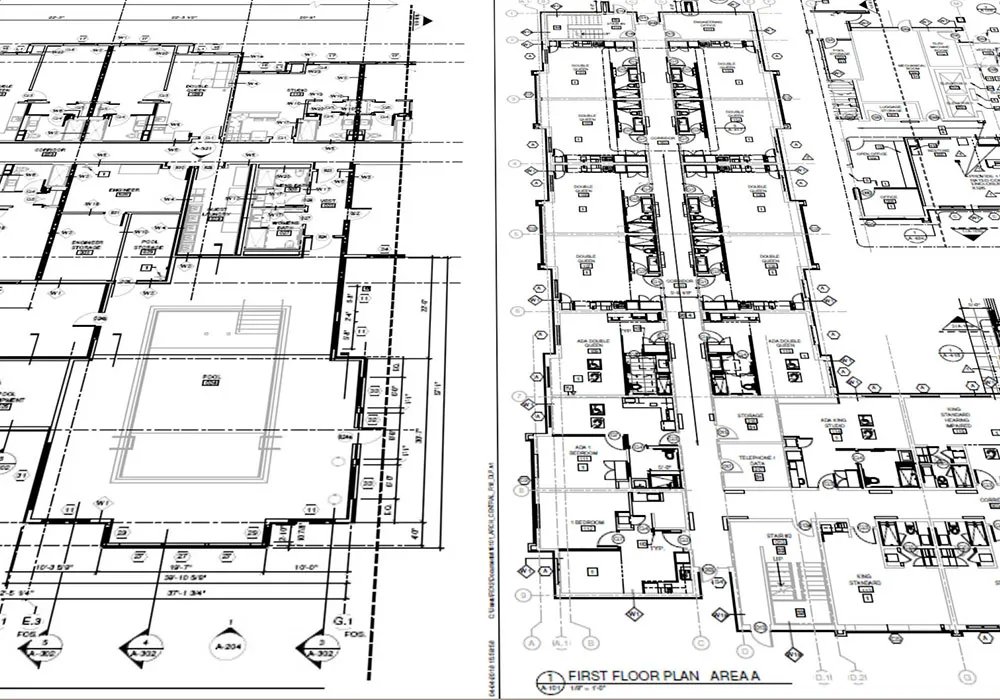
A clear understanding of Types of Residential Drafting Plans helps determine what documentation a residential project truly requires. In residential drafting, plans typically include conceptual layouts, permit submission drawings, construction sets, site plans, and detailed interior documentation. Each serves a distinct stage, from early feasibility and zoning review to contractor coordination and final build execution accuracy.
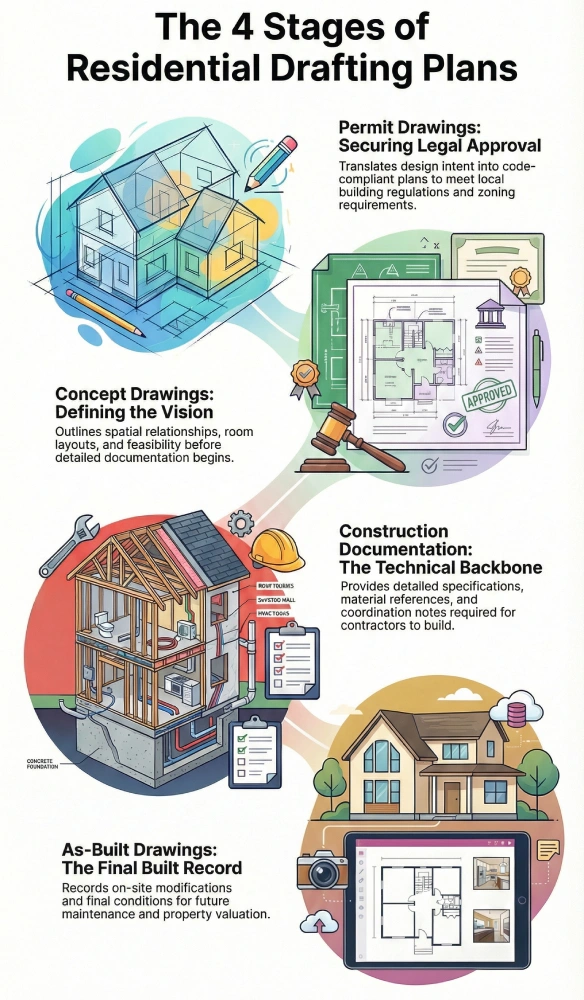
Early stage planning often begins with Concept Drawings that outline the overall vision of a residential project. These drawings define spatial relationships, room layouts, approximate dimensions, and circulation flow. Typically developed from client briefs and preliminary site analysis, they help evaluate feasibility, budget alignment, and design direction before detailed residential drafting documentation begins.
Before construction can legally begin, Permit and Approval Drawings establish compliance with local building regulations and zoning requirements. In residential drafting, these documents translate design intent into code compliant plans, including setbacks, occupancy classifications, and structural notes required by authorities. Their primary role is securing municipal approval while minimizing revision cycles and regulatory objections.
When a project moves into execution, Construction Documentation becomes the technical backbone of the build. This stage of residential drafting delivers fully detailed drawings, specifications, dimensions, material references, and coordination notes required by contractors and trades. It defines how elements connect, how assemblies are built, and how construction sequencing aligns with structural and architectural intent.
Once construction is completed, As Built Drawings record the final built conditions rather than the original design intent. In residential drafting, these documents reflect on site modifications, dimension adjustments, relocated services, and structural changes made during construction. They provide accurate reference data for future renovations, maintenance planning, property valuation, and compliance verification.
Project briefing, site analysis, schematic development, technical detailing, and final coordination define the core stages of The Residential Drafting Process Step by Step. In residential drafting, each phase refines dimensions, zoning constraints, structural input, and code requirements, progressively converting design intent into coordinated construction drawings ready for permits and execution.
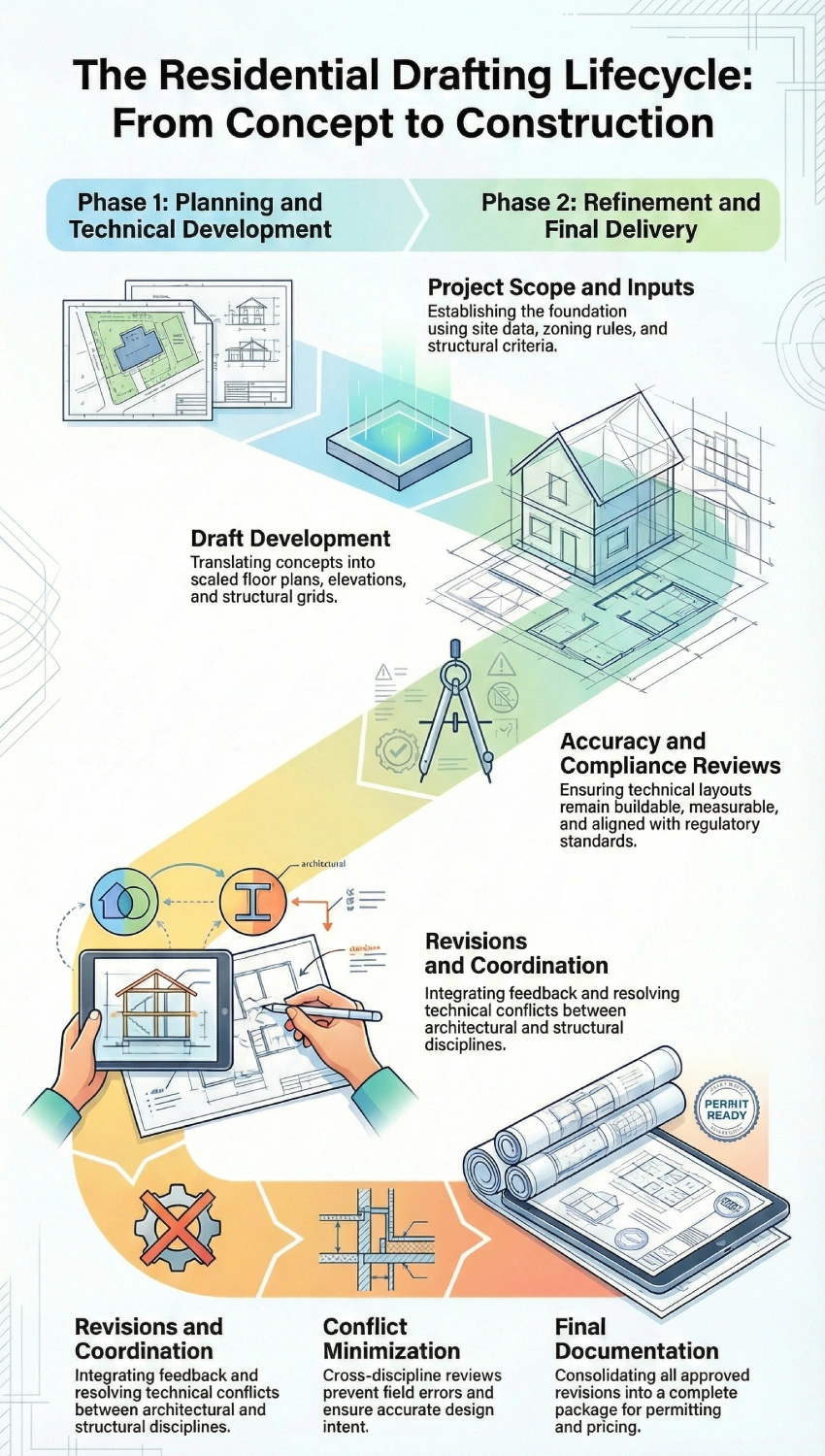
Project Scope and Inputs define the technical foundation before residential drafting begins. At this stage, site data, zoning rules, client requirements, survey reports, and structural criteria are collected and verified. Clear scope definition, measurable deliverables, and code based benchmarks ensure drawings align with regulatory standards and construction feasibility.
Translating approved concepts into structured technical layouts defines the Draft Development phase. During this stage of residential drafting, scaled floor plans, elevations, dimension frameworks, and coordination layers are progressively refined. Accuracy checks, alignment with structural grids, and compliance reviews ensure the developing drawings remain buildable, measurable, and ready for detailed documentation.
Aligning feedback and resolving technical conflicts define the Revisions and Coordination stage. During this phase of residential drafting, architectural updates, structural comments, and client adjustments are reviewed and integrated into the drawing set. Cross discipline coordination minimizes discrepancies, prevents field conflicts, and ensures documentation reflects the most accurate and approved design intent.
Delivering a complete, coordinated drawing set marks the Final Documentation stage. In residential drafting, this phase consolidates all approved revisions, technical notes, dimensions, schedules, and compliance details into a finalized construction package. The outcome is a clear, issue ready document set that supports permitting, contractor pricing, and accurate on site execution.
Comparing internal teams with offshore models reveals distinct operational trade offs. In house residential drafting offers closer real time coordination and fewer time zone barriers, often reducing communication gaps. Offshore residential drafting can lower costs and extend production hours through time differences, though it may require stronger coordination systems to minimize revision cycles and alignment risks.
Offshore residential drafting improves efficiency by expanding production capacity while reducing operational costs. Through structured Offshore Drafting Services, Cost Solution integrates experienced Filipino professionals into residential drafting workflows, enabling up to 70 percent cost savings alongside measurable quality improvement and faster turnaround times. If you would like to explore this model, complete the form below and our team will quickly contact you to review your needs and provide guidance.
You should scale your residential drafting capacity when project volume increases, deadlines tighten, or internal teams struggle to maintain accuracy and turnaround times. Expanding residential drafting resources becomes critical during growth phases, multi project pipelines, permit backlogs, or when coordination complexity begins affecting quality, delivery speed, and overall project profitability.
Your next hire can change the pressure on the whole team
Book a free workforce call and leave with a clearer view of the role, model and practical next step.