



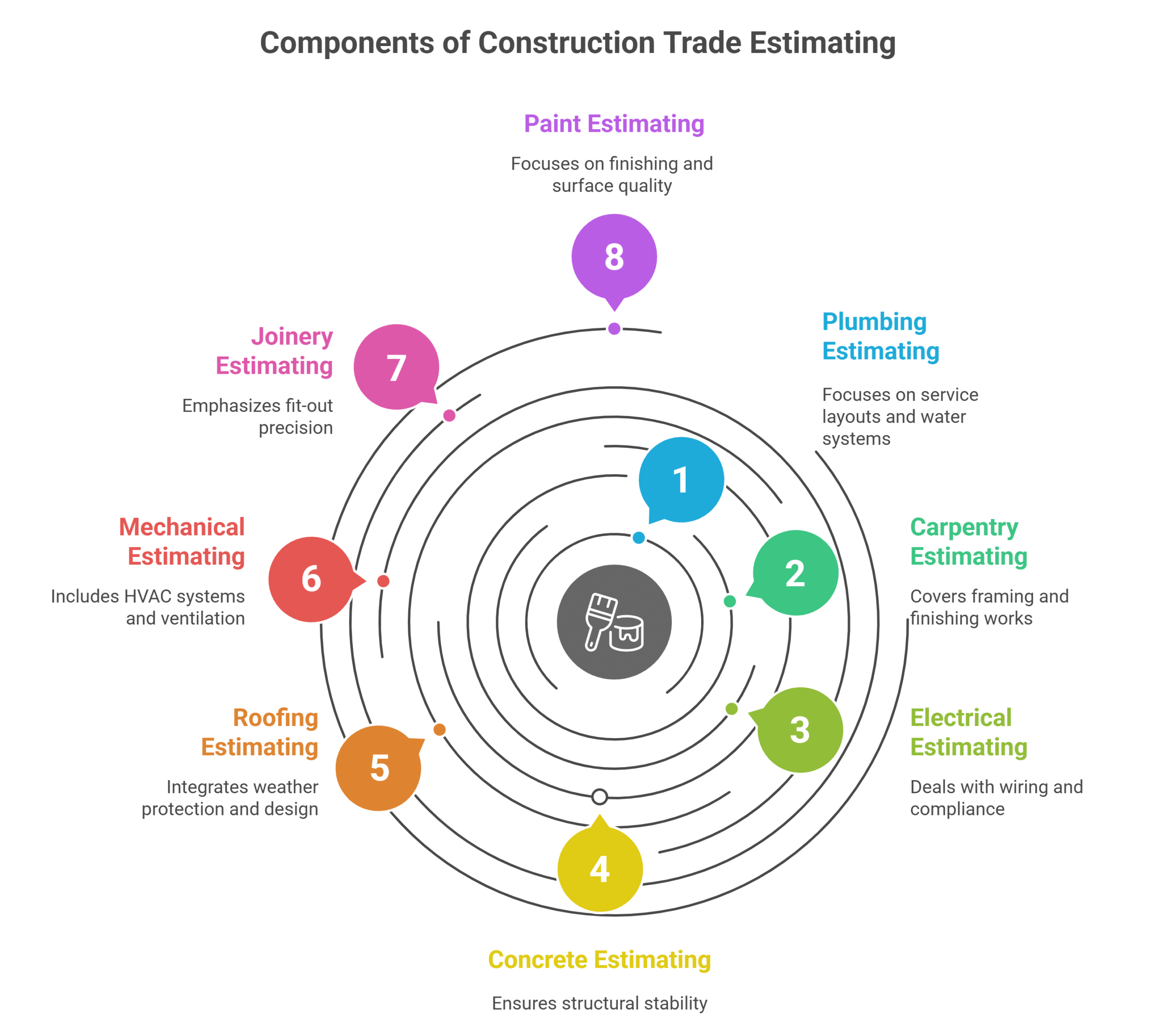
Plumbing, electrical, carpentry, and mechanical estimating collectively form construction trade estimating, essential for cost accuracy and project scheduling. In Australia’s $334 billion construction industry (ACIF 2024), these detailed forecasts guide tendering, minimise overruns, and align subcontractor budgets with national benchmarks like Rawlinsons and Cordell.
Plumbing Estimating and Service Layouts
Accurate plumbing estimates start by evaluating pipelines, fittings, and drainage systems tailored to domestic or commercial needs. Layout designs directly influence how costs spread, with efficient routing cutting waste and installation time. In Australia, where water conservation matters, these calculations factor in local codes to optimise flow and reduce expenses.
Water-efficiency standards drive plumbing choices, pushing for low-flow fixtures and greywater systems. Modern tools in commercial estimation services streamline this, offering 3D modelling for better accuracy. Recent data shows average plumbing material cost variance hits 25% across states, highlighting the need for regional supplier checks to keep budgets tight.
Carpentry Estimating for Framing and Finishing Works
Timber quantities form the backbone of carpentry estimates, alongside labour for framing and detailed joinery. Adhering to structural codes and using Australian timber grades ensures durability. Through material take-off, structural framing and finish carpentry align, preventing overruns. Average framing costs sit at $250 per square metre, varying with design complexity.
Electrical Estimating for Wiring and Compliance
Safe wiring begins with estimates covering conduits, circuits, switchboards, and lighting setups under AS/NZS 3000. Building in risk allowances covers unexpected safety inspections, safeguarding budgets. Copper prices have risen 15% over the past year in Australia, pushing wiring budgets up by 8%, so forward-planning with suppliers is key.
Concrete Estimating for Structural Stability
Foundations gain strength through precise concrete estimates for slabs, beams, and reinforcements. Focusing on compressive strength, mix design, and formwork cycles avoids defects like cracking. This method supports long-term stability in Australian conditions. ABS data indicates building construction prices, including concrete, rose 2.2% over 12 months, underscoring trend monitoring.
Roofing Estimate for Weather Protection and Design Integration
Weather resilience comes from roofing estimates that weigh materials, slope angles, drainage, and insulation suited to Australia’s varied climates. Thermal efficiency, sheeting overlaps, and drainage detailing prevent leaks and energy loss. National benchmarks peg average roof installation at $50 per square metre for metal options, aiding quick feasibility checks.
Mechanical Estimating and HVAC Systems
Ducting efficiency underpins mechanical estimates, encompassing HVAC units, fire sprinklers, and pressure balancing for optimal performance. Integrating HVAC Estimating within broader Construction Estimating Techniques refines energy use predictions. Rawlinsons data reveals HVAC costs claim 25–30% of commercial building budgets, making early accuracy vital for overall savings.
Joinery Estimating for Fit-out Precision
Custom finishes thrive on joinery estimates that tally cabinetry, partitions, and tolerances via CNC fabrication and shop drawings. Cost drivers include imported timber and hardware quality, demanding careful sourcing. IBISWorld notes the fit-out sector’s 3.4% annual growth, reflecting demand for precise planning to meet rising project volumes.
Paint Estimating for Finishing and Surface Quality
Surface prep sets the stage for paint estimates, factoring primer layers, coatings, and area calculations with texture and colour in mind. Environmental VOC standards guide low-emission choices for healthier spaces. Cordell data shows interior painting costs range $15–35 per square metre nationally, helping contractors align with client expectations.
Factors Influencing Construction Trade Estimating
Economic shifts, design tweaks, and workforce dynamics mould the accuracy of Construction Trade Estimating nationwide. These elements demand constant vigilance to adapt forecasts, ensuring projects hit targets without surprises. From market trends to site specifics, understanding them builds robust plans.
Material price fluctuations and supplier regions
Supplier locations sway estimates as import tariffs and commodity swings in steel or timber alter totals. Regional rates add layers, with coastal areas often pricier due to logistics. Infrastructure Australia reports material costs rose 4.3% over the past 12 months, urging diversified sourcing to stabilise budgets.
Labour productivity and crew mix
Crew balance boosts output, where skilled mixes and minimal overtime curb variances. Efficiency hinges on training and tools, turning hours into progress. Benchmarks show average crew output at 6–8 hours per work unit in Australian construction, highlighting how optimised teams slash overall expenses.
Design complexity and building codes (NCC, AS/NZS)
Project height and density amplify material needs under NCC guidelines, while AS/NZS codes enforce safety, affecting timelines. This interplay demands integrated planning for cost control. Following these standards predicts expenses reliably, avoiding rework in high-rise or intricate builds across Australia.
Modern Tools and Techniques for Trade Estimating
Digital evolution transforms Construction Trade Estimating via platforms like CostX, Cubit, and Buildxact, automating take-offs and scenario testing. These tools cut errors, speeding up bids for Australian contractors. Real-time data integration keeps estimates current amid market changes.
| Software Name | Key Feature | Industry Adoption Rate |
|---|---|---|
| CostX | BIM integration for 3D quantity extraction | 45% among medium-large firms |
| Cubit | Natural language search for quick assemblies | 35% in residential sector |
| Buildxact | Cloud-based quoting with supplier links | 30% for small builders |
Advantages of Professional Construction Trade Estimating
Overruns drop when pros handle Construction Trade Estimating, sharpening bids and fostering trust among stakeholders. Verified models trim variation orders by up to 18%, per ACIF insights, letting teams focus on delivery. This precision supports smoother workflows in Australia’s competitive landscape.
Building Confidence Through Accurate Trade Estimating
Data-driven Construction Trade Estimating fosters transparency, yielding long-term savings and solid contractor-client bonds. Australian builders thrive on this precision, maintaining profitability while upholding compliance standards. Ultimately, it turns potential pitfalls into predictable successes.