


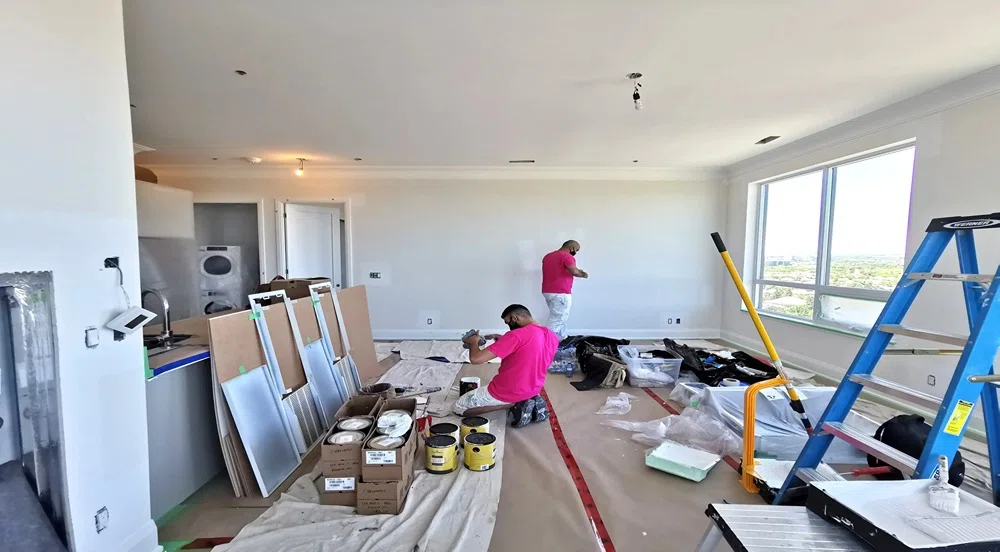
The process of assessing surface area, type of paint, and required coats is crucial for an effective estimate. Factors like paint quality, surface condition, and labour costs significantly influence the final price. On average, painting costs in Australia range from $30 to $50 per square metre. Paint estimating ensures budget alignment and optimal resource allocation.
How to estimate paint required?
To estimate the amount of paint required, begin by subtracting the areas of any doors or windows from the total wall area. For example, if the wall area is 36 m² and the combined area of doors and windows is 3.7 m², you’ll need paint for approximately 32.3 m², which we can round to 33 m².acryloc-how-much-paint-do-i-need
How to write a painting estimate example?
- Identify the Surfaces: Start by identifying all the surfaces that need painting, such as walls, ceilings, and doors.
- Calculate the Area: Measure and calculate the area of each surface. Use a laser measure or standard tape measure for accurate results.
- Choose the Paint Type: Decide on the type of paint required for each surface (e.g., oil-based or acrylic). This will affect the coverage and cost.
- Calculate the Paint Quantity: Based on the surface area and paint type, determine the amount of paint needed. You can use paint coverage calculators for more precise estimates.
- Include Labour and Material Costs: Factor in the costs of materials, labour rates (hourly or per job), and equipment. To get more accurate figures, check with local suppliers for current pricing.
- Add a Margin for Unexpected Costs: Include a contingency margin (usually 5-10%) to cover any unforeseen circumstances, such as surface preparation or unexpected weather delays.
To make the estimate more accurate, consider using professional software or apps for painting estimation, such as PaintScout or PlanSwift, which help streamline the process and incorporate local pricing data.
How many sq ft does 1 liter of paint cover?
One liter of emulsion paint typically covers around 90 square feet. This makes it a great option for large areas such as hallways, walls, and ceilings, as it provides complete coverage quickly due to its high stretchability rate. This efficient coverage helps save time, especially when working on expansive surfaces.
Building Components That Require Paint Estimating
Starting with interiors, precise paint estimating ensures seamless finishes on walls and ceilings, factoring in substrate types like plasterboard or concrete. Labour-intensive prep work, such as sanding and priming, directly impacts timelines, while coverage calculations prevent material waste.How to Estimate Painting Jobs: Tips & Special Considerations
Shifting outdoors, paint estimating covers façades and protective coatings on steel or timber, where weather resistance is key. Environmental factors demand durable systems to combat UV damage or salt exposure in coastal areas. Coordinating these with site specifics enhances longevity, tying into overall project durability.
- Interior drywall and ceilings
- Metal balustrades and handrails
- Exterior façades, soffits, and trims
- Steel beams with anti-corrosive coatings
Reliable surface take-offs in paint estimating dovetail with plumbing estimating, as finishing trades must sequence around wet area installations to minimise rework and optimise resource allocation across the build.
Primary Factors That Affect Paint Estimating Accuracy
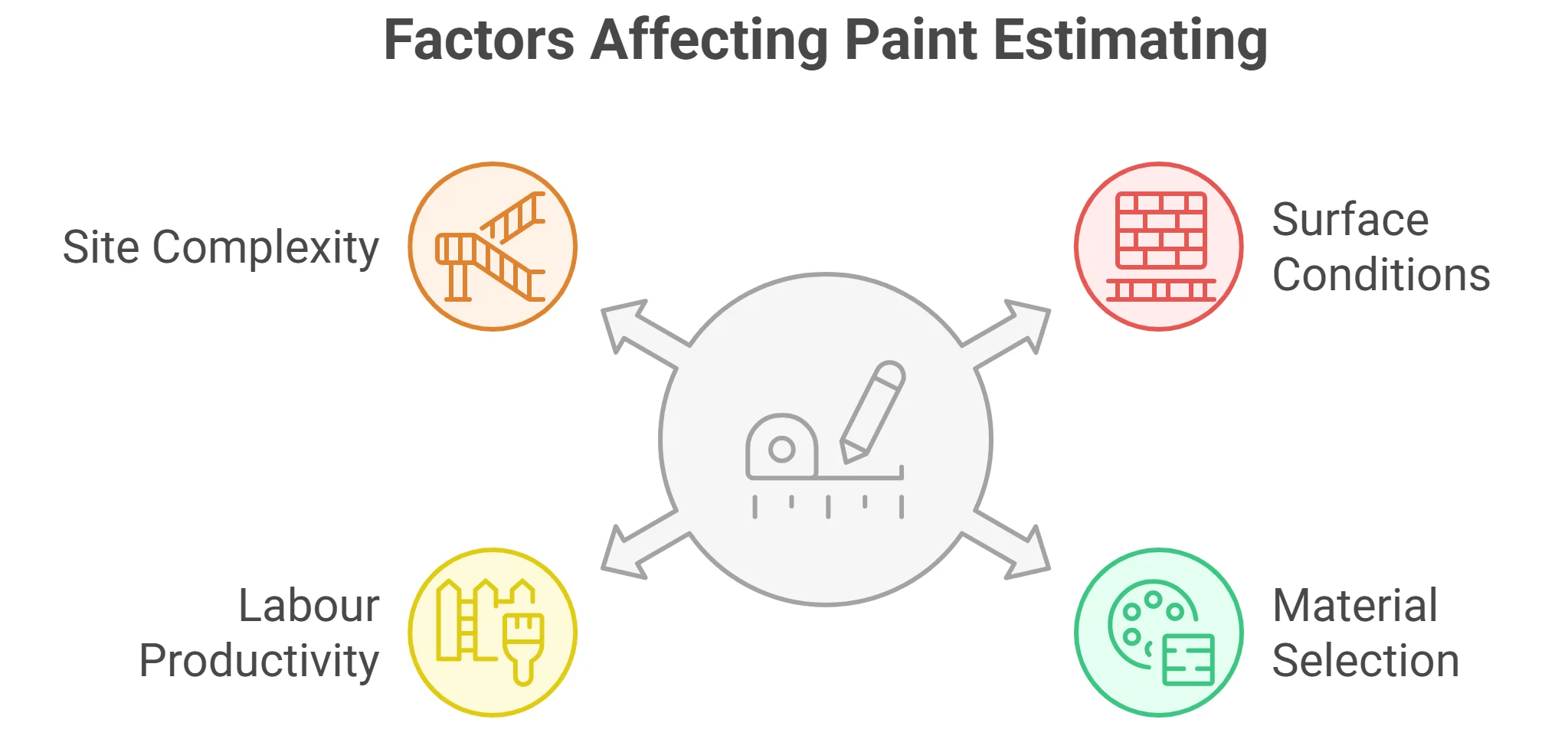
Variations in paint estimating accuracy stem from surface prep, materials, labour, and site hurdles, with Rawlinsons and Cordell benchmarks indicating ±12% cost swings based on prep quality. Addressing these early refines estimates for painting jobs, bolstering bid reliability in competitive tenders.How Can I Estimate Paint Coverage More Accurately for Jobs?
Surface conditions and preparation impact on paint estimating
Substrate flaws like cracks or moisture can spike labour hours in paint estimating, necessitating extra primers or sealers. Poor prep adds 8-10% to coating time, per industry reports, so thorough inspections upfront cut surprises. This keeps projects on track, especially in humid climates where drying delays loom.
Material selection and coating systems in paint estimating
Opting for acrylics in interiors versus epoxies for industrial floors alters coverage and durability in paint estimating. Brands like Dulux and Wattyl meet VOC standards, enhancing environmental compliance. With lifecycle costs in mind, selections balance upfront spend against maintenance, yielding sustainable outcomes for Australian builds.
Labour productivity and equipment efficiency in paint estimating
Tools like airless sprayers boost output in paint estimating by 25-30% over rollers, slashing time on large surfaces. Efficient shift planning and equipment upkeep further trim costs, ensuring crews hit productivity targets. This approach maximises value, particularly in tight deadlines.
Access, height and site complexity in paint estimating
High ceilings or confined spaces inflate unit rates in paint estimating, with multi-storey access hiking costs by up to 18% in urban projects. Scaffolding logistics demand careful planning to avoid delays. Factoring these in refines estimates for painting jobs, safeguarding margins.
Paint Estimating Methods and Technologies Used in Australia
Traditional manual take-offs in paint estimating rely on blueprints and spreadsheets, calculating quantities from square metres and wastage allowances. While reliable for small jobs, they risk human error in complex builds. Shifting to digital streamlines this, integrating real-time data for sharper accuracy.
Modern tools like CostX, Cubit, and Buildxact revolutionise paint estimating by automating measurements from BIM models. These platforms support collaborative updates, reducing revisions. Adoption has surged 27% among mid-tier contractors since 2023, reflecting efficiency gains in estimating painting across trades.
- Automated quantity extraction from digital plans
- Cloud-based cost collaboration
- Integration with subcontractor rate databases
Such advancements in paint estimating align with AI-driven Construction Trade Estimating platforms, fostering precision in multi-trade environments.
What is the best estimating software for painters?
PaintScout, Jobber, PlanSwift, ServiceTitan, and STACK are the top painting estimating software used in Australia. PaintScout is designed specifically for the painting industry, Jobber works well for small teams, and PlanSwift excels in takeoff and large-scale construction projects. ServiceTitan and STACK are also popular, offering comprehensive field service management and preconstruction tools.
Challenges and Risks in Paint Estimating Across Regions
Regional disparities challenge paint estimating, with labour costs varying 15% between Queensland and Victoria due to market dynamics. Climate influences system choices, like humidity-resistant coatings in the north, while post-2022 supply volatility triggers ±9% price shifts. Mitigation via benchmarks and clauses curbs exposure.
Best Practices and Benchmarks for Reliable Paint Estimating
Aligning with Rawlinsons Australian Construction Handbook in paint estimating provides validated unit rates, anchoring bids to market realities. Regular audits against these standards catch variances early, promoting consistency. This foundation supports estimating painting by incorporating site-specific adjustments without guesswork.
| Paint Type | Coverage Rate (m²/L) | Typical Cost (AUD/m²) |
|---|---|---|
| Interior Acrylic | 12–14 | $5.5–$7.2 |
| Epoxy Coating | 8–10 | $8.0–$10.0 |
| Polyurethane | 10–12 | $9.5–$11.5 |
Leveraging these benchmarks in paint estimating trims contingency allowances by 5-8%, freeing capital. Cross-trade coordination, detailed documentation, and QA protocols further enhance reliability, ensuring finishes integrate smoothly without costly disputes or delays.
Why Paint Estimating Shapes Project Profitability?
Precision in paint estimating drives forecasting accuracy, curbing overruns and bolstering margins by 2-3% overall. It weaves into Construction Trade Estimating workflows, promoting sustainable control. Ultimately, mastering this trade detail empowers contractors to deliver value, securing repeat business in Australia’s evolving market.