
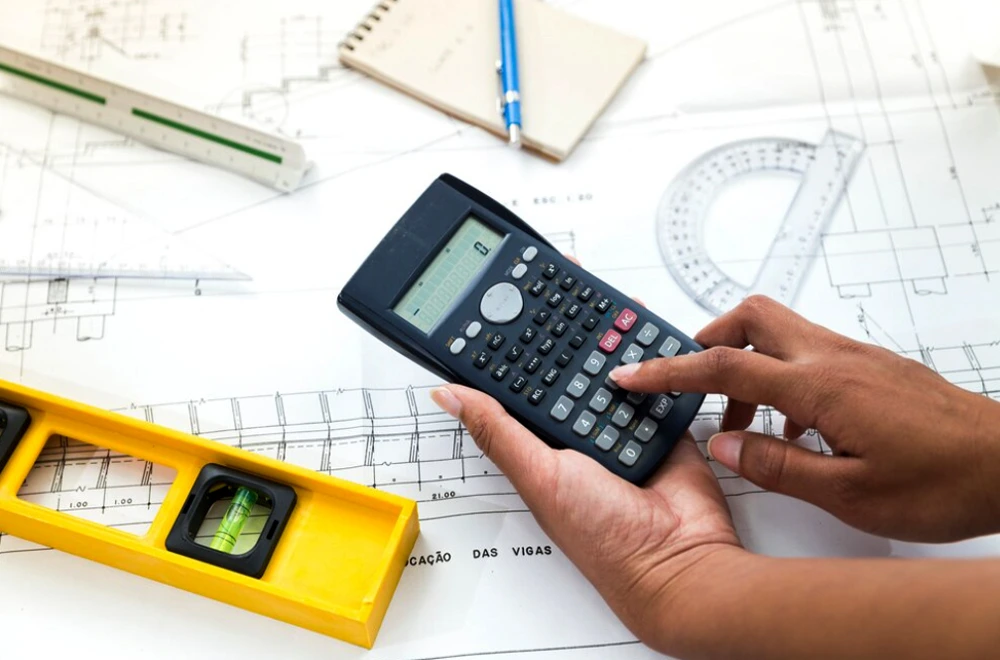
Preliminary, detailed, and quantity estimates represent the main types of estimation in civil engineering, each serving unique project phases. Preliminary estimates guide feasibility, detailed ones define budgets, and quantity estimates ensure resource precision. Together, they improve cost control, scheduling accuracy, and decision-making across infrastructure and building projects.
Preliminary (Ballpark) Estimation: Overview and Use Cases
Early-stage planning demands quick, high-level cost insights. Preliminary estimation, often called ballpark estimation, provides a rough cost outline based on limited data. It’s ideal for feasibility studies or securing initial stakeholder approval. For instance, a developer eyeing a multi-storey car park in Sydney might use historical data to estimate $10–15 million, refining later as plans solidify.
This method relies on broad metrics like square footage or past project costs. Tools like cost-per-square-metre databases or basic spreadsheets often suffice. Accuracy typically ranges within ±20–30%, so it’s critical to revisit estimates as details emerge. Success hinges on clear assumptions and historical benchmarks to avoid misleading projections.
Detailed Estimation: Accurate Costing for Large Projects
For large-scale projects like bridges or highways, precision is non-negotiable. Detailed estimation dives deep into project specifics, incorporating design plans, material lists, and labour costs. A 2023 Melbourne rail extension project, for example, used detailed estimation to pinpoint costs within ±5%, factoring in steel prices and site logistics.
Engineers break down the project into components such as foundation, superstructure, and finishes, assigning costs using detailed drawings. Software like CostX or Buildsoft enhances accuracy by integrating real-time material costs. The key metric here is thoroughness; incomplete designs can skew results, so regular updates are essential.
Unit Rate Estimation: Common Practices for Cost Calculation
Breaking costs into measurable units simplifies budgeting. Unit rate estimation calculates expenses based on standard rates for tasks, like $50 per square metre for concrete pouring. This approach shines in repetitive tasks, such as roadworks or residential developments, where standard rates are well-established.
Contractors often use industry guides like Rawlinsons Australian Construction Handbook for reliable rates. For example, a Perth housing project might estimate $1,200 per square metre for brickwork. Accuracy depends on up-to-date rates and site-specific adjustments, ensuring the different types of estimation in civil engineering remain practical and grounded.
Factor-Based Estimation: Applying Multiplier Methods
When time is tight, factor-based estimation offers a shortcut. This method applies multipliers to base costs, adjusting for project complexity, location, or inflation. For instance, a rural road project might start with a base cost of $500,000, then multiply by 1.3 for remote access challenges.
Multipliers come from industry experience or databases like Cordell Cost Guides. While quick, this method risks oversimplification, so cross-checking with historical data is vital. It’s a practical tool in civil estimating, especially for mid-sized projects needing fast turnarounds.
Analogous Estimation: Comparing Similar Projects for Budgeting
Drawing parallels with past projects can guide budgeting effectively. Analogous estimation uses costs from similar completed projects to forecast new ones. For a new Brisbane warehouse, an engineer might reference a similar build from 2022, adjusting for inflation and site differences.
This method excels when historical data is robust, but it requires careful selection of comparable projects. Tools like project management platforms or cost databases help standardise comparisons. It’s one of the different types of estimation in civil engineering that balances speed with reasonable accuracy, typically within ±15%.
Expert Judgment Estimation: Relying on Experience and Insight
Seasoned professionals bring invaluable intuition to the table. Expert judgment estimation leverages years of experience to estimate costs when data is sparse. For example, a veteran engineer might estimate $2 million for a retaining wall based on similar projects they’ve overseen.
This method shines in unique or complex projects, like heritage restorations, where standard data is limited. However, it risks bias, so combining expert input with data-driven tools ensures reliability. Regular calibration against actual costs keeps estimates sharp and credible.
Parametric Estimation: Using Parameters to Predict Costs
Data-driven precision defines parametric estimation. This method uses statistical models to predict costs based on key parameters, like cost per lane-kilometre for highways. A 2024 Sydney road project might use $3 million per kilometre, adjusted for terrain and traffic volume.
Software like Primavera or Excel models supports parametric calculations, offering scalability for large projects. Accuracy depends on robust data inputs and clear parameter definitions. It’s a cornerstone of types of estimation in civil engineering for projects demanding statistical rigour.
Monte Carlo Estimation: Probability-Based Approaches for Uncertainty
Embracing uncertainty can refine cost predictions. Monte Carlo estimation uses simulations to model cost risks, generating a range of outcomes based on probability. For a $50 million dam project, it might predict a 70% chance of staying within $52 million, factoring in material price volatility.
Bill of Quantities (BOQ) Estimation: Structured Costing Based on Quantities
A structured approach ensures clarity in costing. Bill of Quantities (BOQ) estimation lists every project item, including materials, labour, and equipment, along with their associated costs. For a Canberra office build, a BOQ might detail 1,000 cubic metres of concrete at $200 per cubic metre.
BOQs are built from detailed plans and specifications, often using software like heavy civil construction software such as Cubit. Accuracy relies on precise measurements and up-to-date pricing. This method is a gold standard for tendering, ensuring transparency and consistency.Bill Of Quantities: Learn Its Meaning, Types & Advantages
Assembly Estimation: Costing by Construction Assembly Units
Grouping components streamlines cost calculations. Assembly estimation prices entire systems, such as a roof or foundation, rather than individual materials. For example, a Perth school project might estimate $150,000 for a complete roofing assembly, including trusses, insulation, and labour.
This method uses pre-defined assembly costs from databases like Cordell. It’s efficient for repetitive structures but requires accurate scope definition to avoid errors. Among types of estimation in civil engineering, it balances detail with practicality.
Technological Tools for Estimation: The Impact of Software on Accuracy
Technological tools have become essential in civil engineering estimation, particularly in Australia, where they play a vital role in improving the accuracy and efficiency of different types of estimates. These tools reduce manual errors, provide real-time data, and facilitate better resource management for projects of any scale.Best Construction Estimating Software for Companies in 2025
Key Estimation Tools for Civil Engineering in Australia:
- CostX; A leading software for cost estimation and takeoff, widely used in construction projects.
- BuildSoft; Offers solutions for detailed estimating, including material and labour costs for civil engineering projects.
- Procore Estimating; A comprehensive tool used for budgeting, scheduling, and cost management on large-scale projects.
- Aconex; Helps with project collaboration and cost estimation, particularly on large civil infrastructure projects.
- Trimble Tekla; Software for detailed cost estimation, particularly used for structural engineering projects.
Challenges in Estimation: Common Pitfalls and How to Avoid Them
Estimation isn’t without hurdles. Common pitfalls include incomplete data, scope creep, or outdated pricing. For instance, underestimating labour costs led to a 10% budget overrun in a 2022 Adelaide project. To counter this, regular data updates and clear scope definitions are crucial.
Another challenge is over-reliance on single methods. Combining approaches, such as parametric and expert judgment, enhances accuracy. Training teams on tools and fostering collaboration between estimators and engineers mitigates risks, ensuring robust types of estimation in civil engineering.
The Future of Estimation: Emerging Trends in Civil Engineering
Innovation is reshaping cost estimation. AI-driven tools now predict cost trends with 20% greater accuracy, per a 2024 Construction Innovation report. Digital twins and BIM (Building Information Modelling) integrate real-time data, enhancing precision across types of estimation in civil engineering.
Sustainability is also influencing estimates, with green materials and carbon costs factoring into budgets. Staying ahead requires adopting these technologies and upskilling teams, ensuring estimates remain accurate and competitive in Australia’s evolving construction landscape.