Drafting Services That Solve Details Before They Cost You
Our drafting services combine skilled offshore Filipino teams with Australian-led oversight, enabling up to 70% cost savings without compromising documentation accuracy or compliance standards.
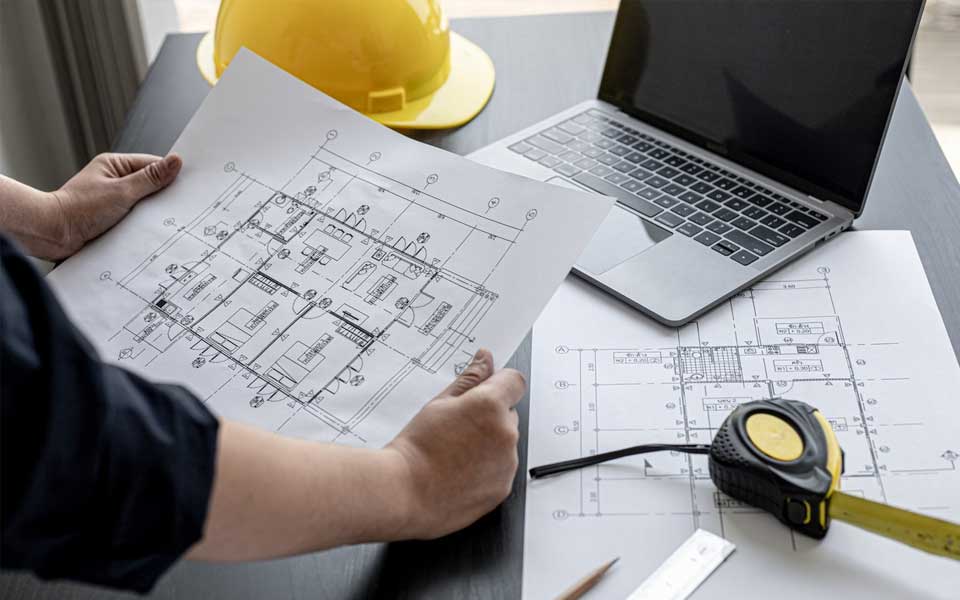
✅ Offshore Filipino drafting teams provide skilled technical support, consistent communication, and reliable output aligned with your project standards and timelines.
✅ Up to 70% cost efficiency allows you to scale drafting capacity strategically while maintaining documentation accuracy and professional quality control.
✅ Workflow integration with your systems ensures seamless collaboration, faster turnaround times, and full alignment with your internal processes and software platforms.
Architectural drafting, structural detailing, MEP documentation, and BIM coordination define the range of professional drafting support available. In the following sections, we explain how tools such as AutoCAD-based CAD production, Revit modeling, and Building Information Modeling workflows address different project scales, regulatory requirements, and construction stages across multiple industries globally.
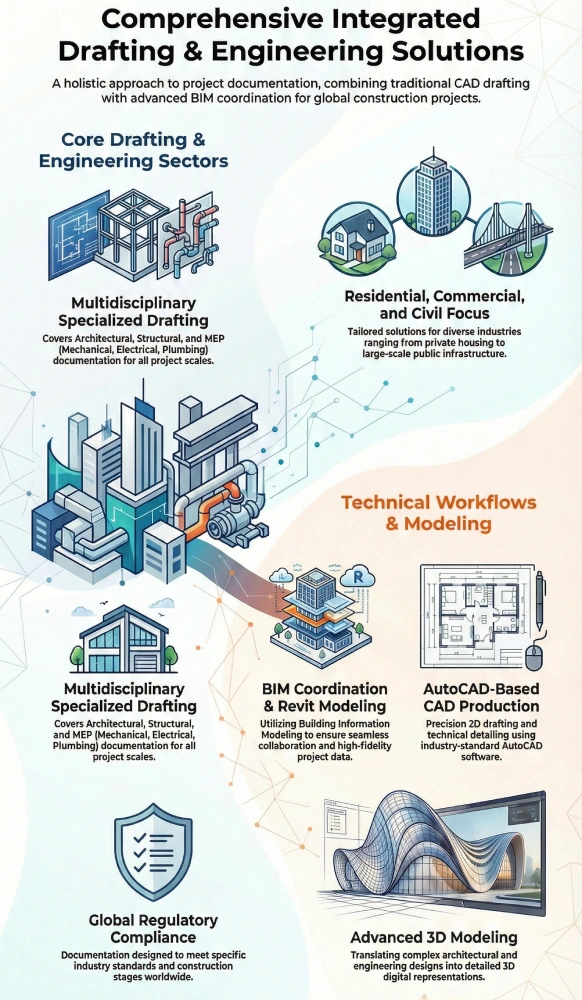
Design documentation tailored for houses, townhouses, duplexes, and small developments focuses on livability, council compliance, and buildability from concept to permit stage. Unlike large-scale commercial sets, residential drafting prioritizes local codes, client customization, and builder coordination. Using tools like AutoCAD and Revit within structured Building Information Modeling workflows improves spatial planning accuracy and reduces site revisions.
Documentation for offices, retail spaces, warehouses, and mixed-use developments requires a stronger focus on regulatory compliance, structural coordination, and multi-disciplinary integration. Commercial Drafting supports larger project teams by aligning architectural, structural, and MEP requirements while addressing fire codes, accessibility standards, and authority approvals. Compared to residential work, it involves greater technical detailing, stakeholder coordination, and performance-driven documentation.
Infrastructure and land development projects depend on precise technical drawings that define grading, drainage, road alignments, utilities, and earthworks. Civil Drafting translates survey data and engineering calculations into coordinated plans used for approvals and site execution. It plays a critical role in managing stormwater systems, subdivision layouts, and public works, where accuracy directly impacts safety, long-term performance, and regulatory acceptance.
Translating design concepts into buildable documentation requires clarity in layout, dimensions, materials, and compliance standards. Architectural Drafting develops floor plans, elevations, sections, and detailed construction drawings that guide builders from permit submission to final execution. It addresses spatial planning, façade articulation, and code alignment while ensuring coordination with structural and building services requirements across residential and commercial developments.
Coordinating mechanical, electrical, and plumbing systems requires precise layouts that prevent clashes before construction begins. MEP Drafting defines duct routes, cable trays, piping networks, load calculations, and equipment placement to ensure system performance and energy efficiency. It supports contractors during installation, simplifies inspections, and reduces costly on-site modifications through carefully aligned technical documentation.
Accurate structural documentation forms the backbone of safe and durable construction. Structural Drafting converts engineering calculations into detailed plans for foundations, beams, slabs, columns, and reinforcement layouts. It clarifies load paths, material specifications, and connection details so fabricators and site teams can execute with confidence, reducing ambiguity, minimizing structural risk, and ensuring compliance with approved engineering designs.
Digital drawing production relies on precision, layering standards, and file compatibility to support efficient project delivery. CAD Drafting converts concepts, markups, and hand sketches into accurate 2D technical drawings used across architectural, structural, and engineering disciplines. As part of broader drafting services, it improves revision control, accelerates documentation updates, and ensures clear communication between designers, consultants, and construction teams.
Visualizing a project before construction begins improves coordination, client approvals, and technical clarity. 3D Modeling develops detailed digital representations that illustrate spatial relationships, material finishes, and system interactions across disciplines. Integrated within professional drafting services, it helps identify design conflicts early, supports quantity takeoffs, and enhances presentation quality for stakeholders, investors, and regulatory submissions.
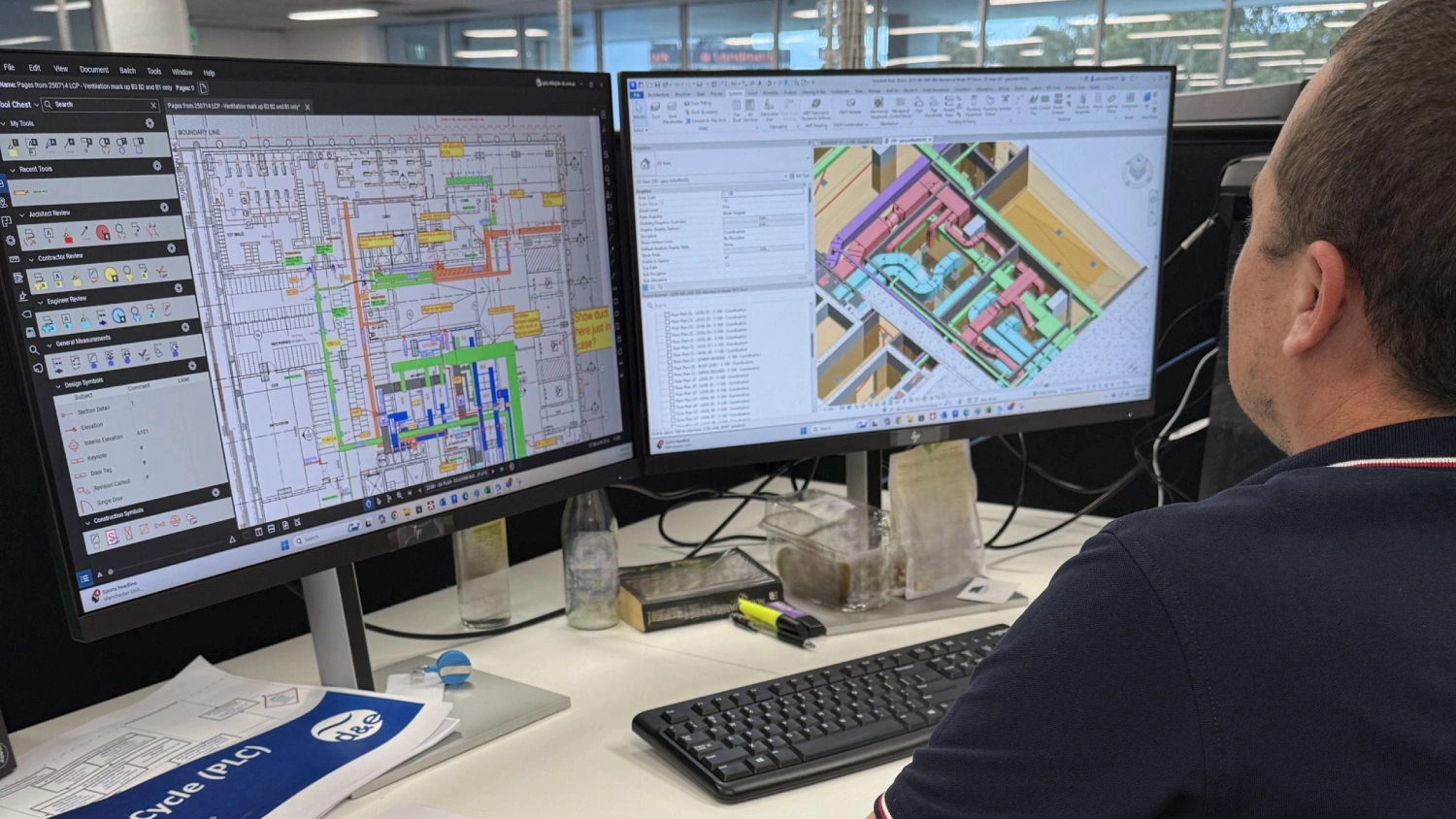
Working with local teams offers easier communication, real-time collaboration, and stronger regulatory familiarity. However, the In-Country Drafting Model typically involves higher labor costs and limited scalability compared to offshore alternatives.
Partnering with global teams enables flexible staffing and significant cost savings. The Offshore Drafting Delivery Model supports scalability, while offshore drafting services require structured communication and quality oversight to ensure consistent standards.
Long-term business growth depends on selecting a drafting approach that balances cost control, quality assurance, and operational flexibility. The right structure, whether local or offshore, should align with project volume and internal capacity. Strategic drafting services enable firms to scale confidently, improve documentation accuracy, and maintain consistent performance across evolving construction demands.
Your next hire can change the pressure on the whole team
Book a free workforce call and leave with a clearer view of the role, model and practical next step.